Color Palette
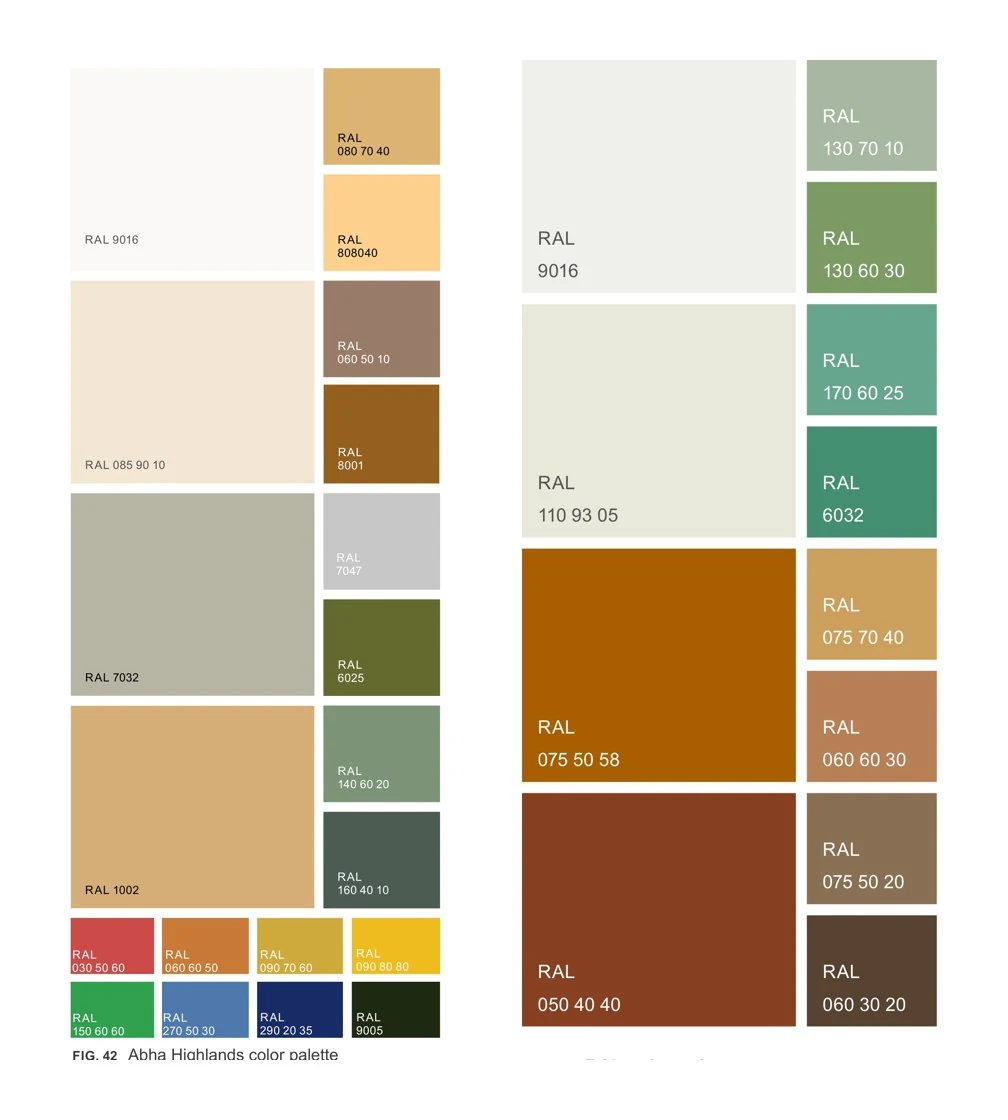
An official palette for each region, with limits on how much of a facade bright colors may cover.
Abha Highlands and Hejazi Coast guidelines



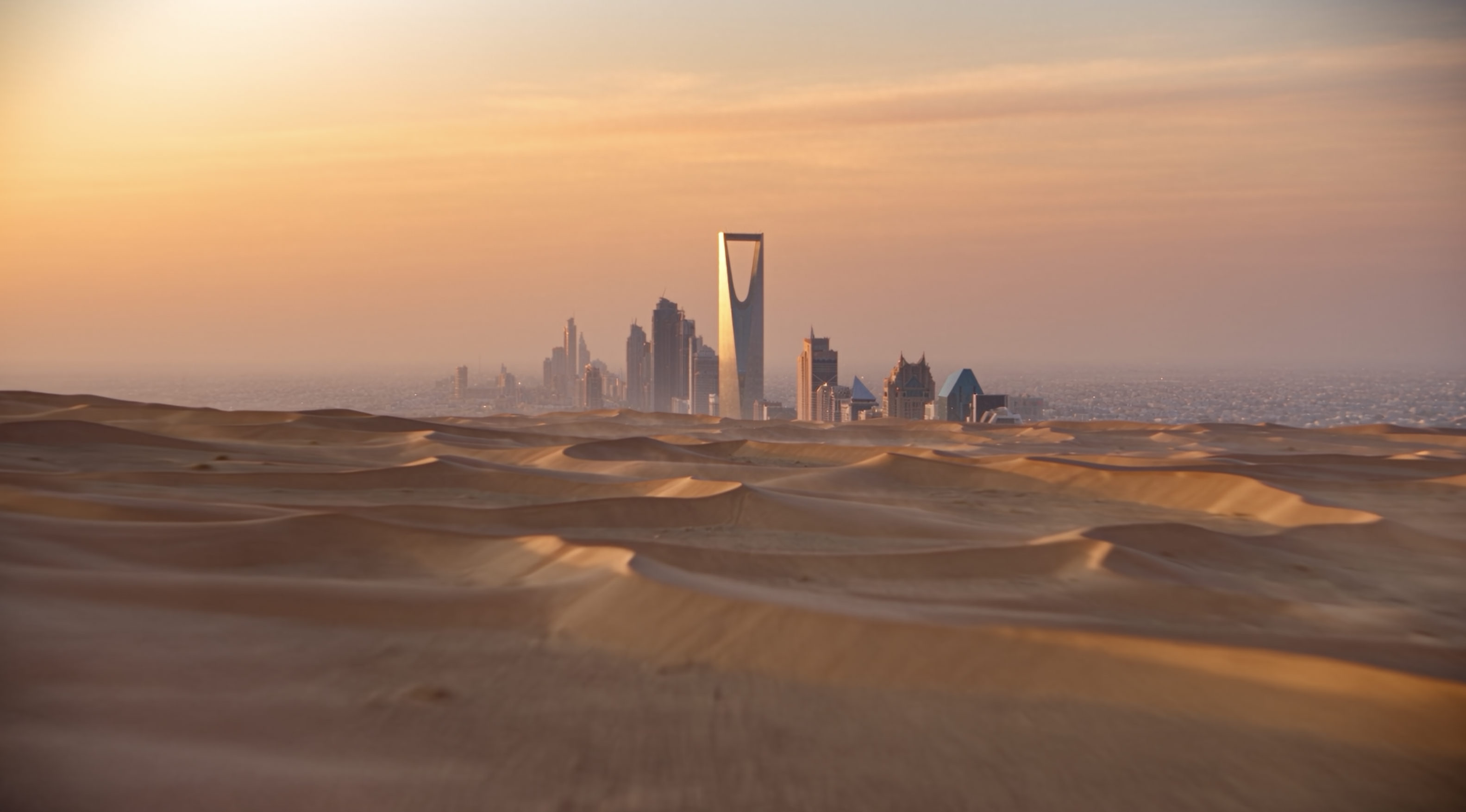
As part of Vision 2030, the Kingdom is redesigning its cities around national identity. In 2025, Saudi Arabia launched a map of 19 architectural characters, each with its own design guidelines, and updated its signage requirements to reflect regional architecture. For a brand, this means its colors and facades now have to fit the region they stand in.
Architectural Design Guidelines
Find the regions where you already operate or plan to open, then see what their guidelines require on the map.
The guidelines set rules for everything customers see from the street: the shape of the building, its colors and materials, ornaments, shopfronts, signage, and lighting. The examples below are taken from the official guidelines.
Each guideline describes three styles for new buildings. Traditional follows historic forms in full, transitional simplifies them, and contemporary keeps the proportions while reinterpreting the details. Which style is allowed depends on the location.
An official palette for each region, with limits on how much of a facade bright colors may cover.
Abha Highlands and Hejazi Coast guidelines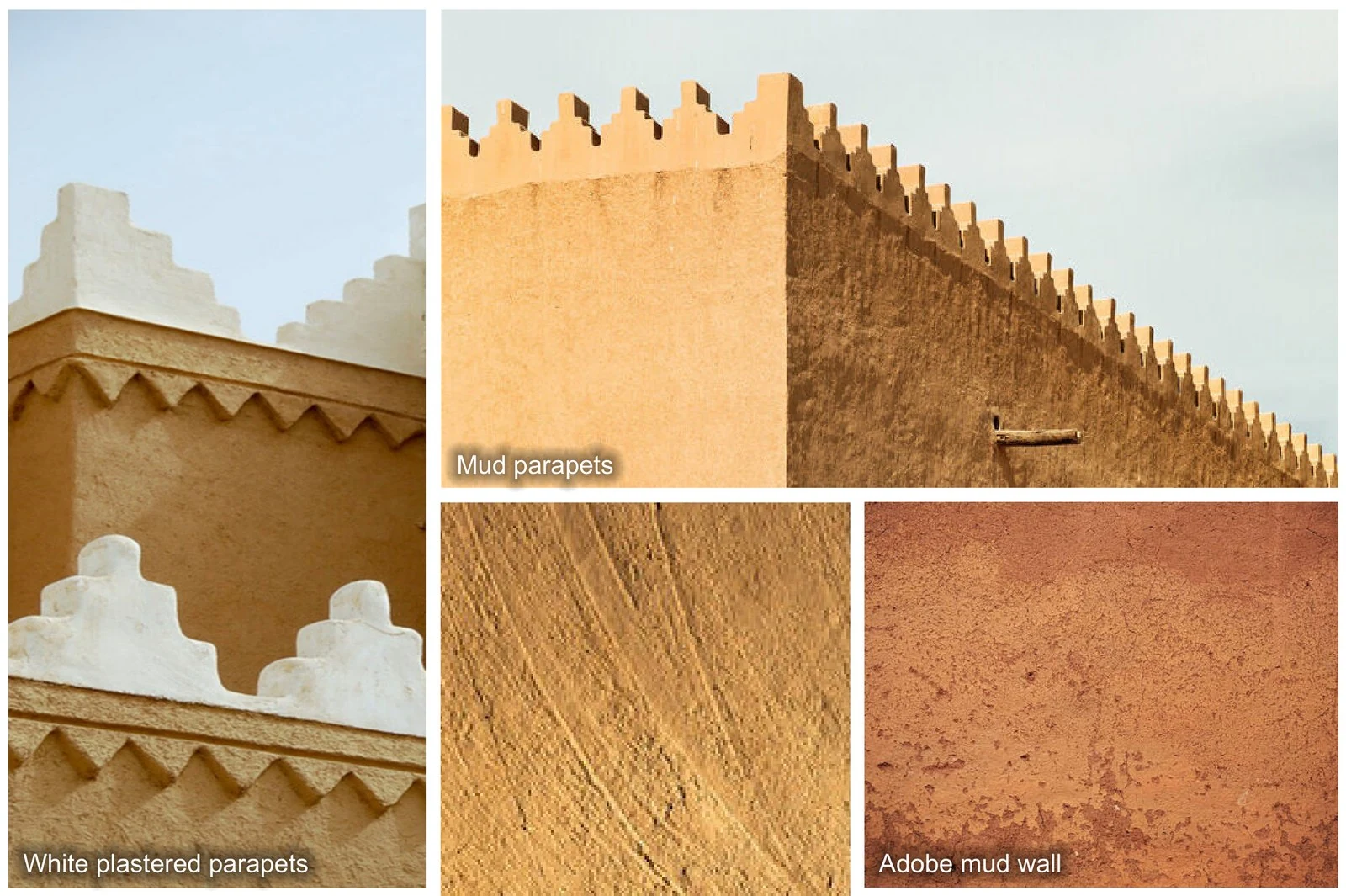
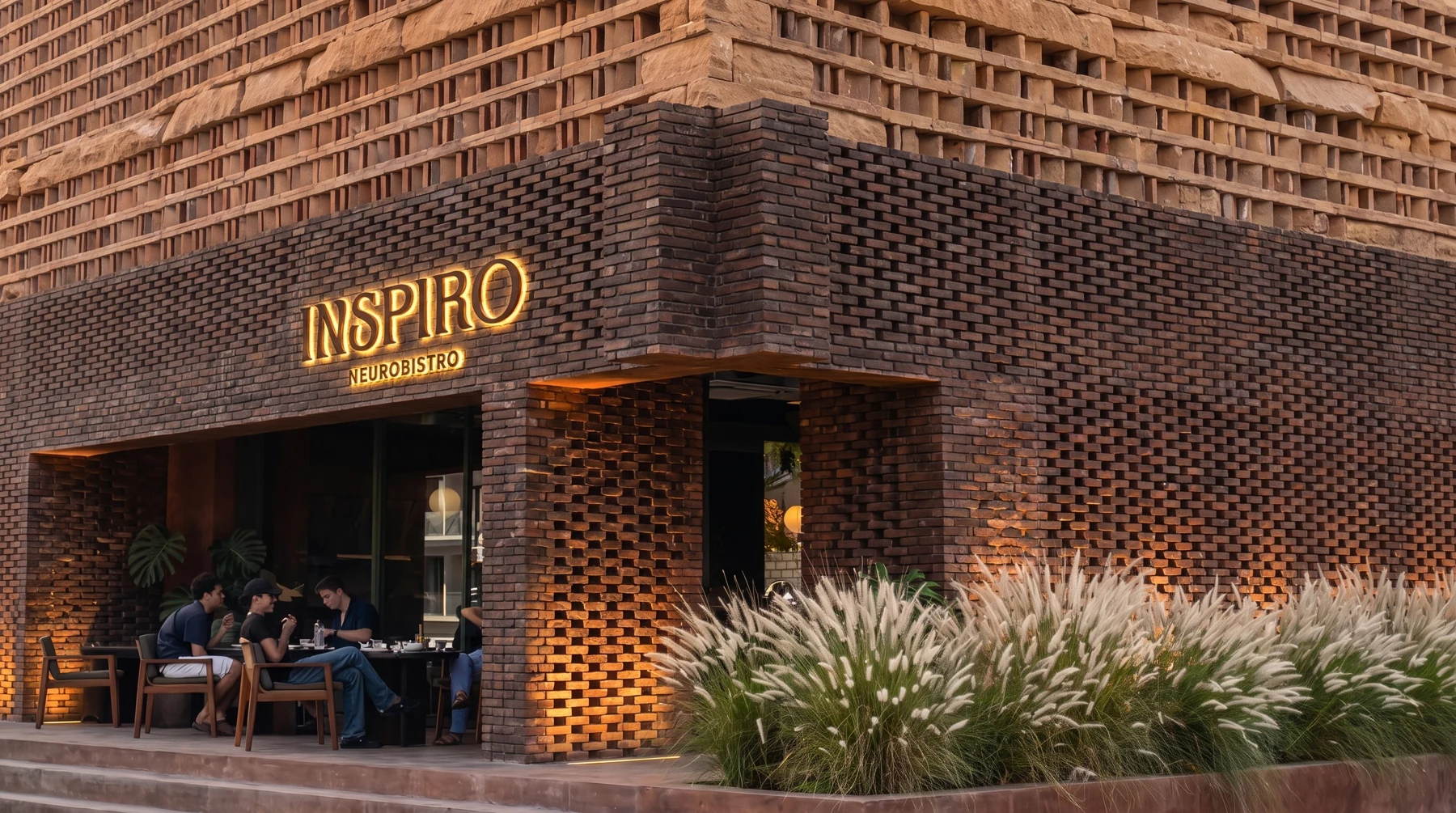
Local stone, mud plaster, and timber, with matte finishes instead of reflective ones.
Central Najdi and Tabuk Coast guidelines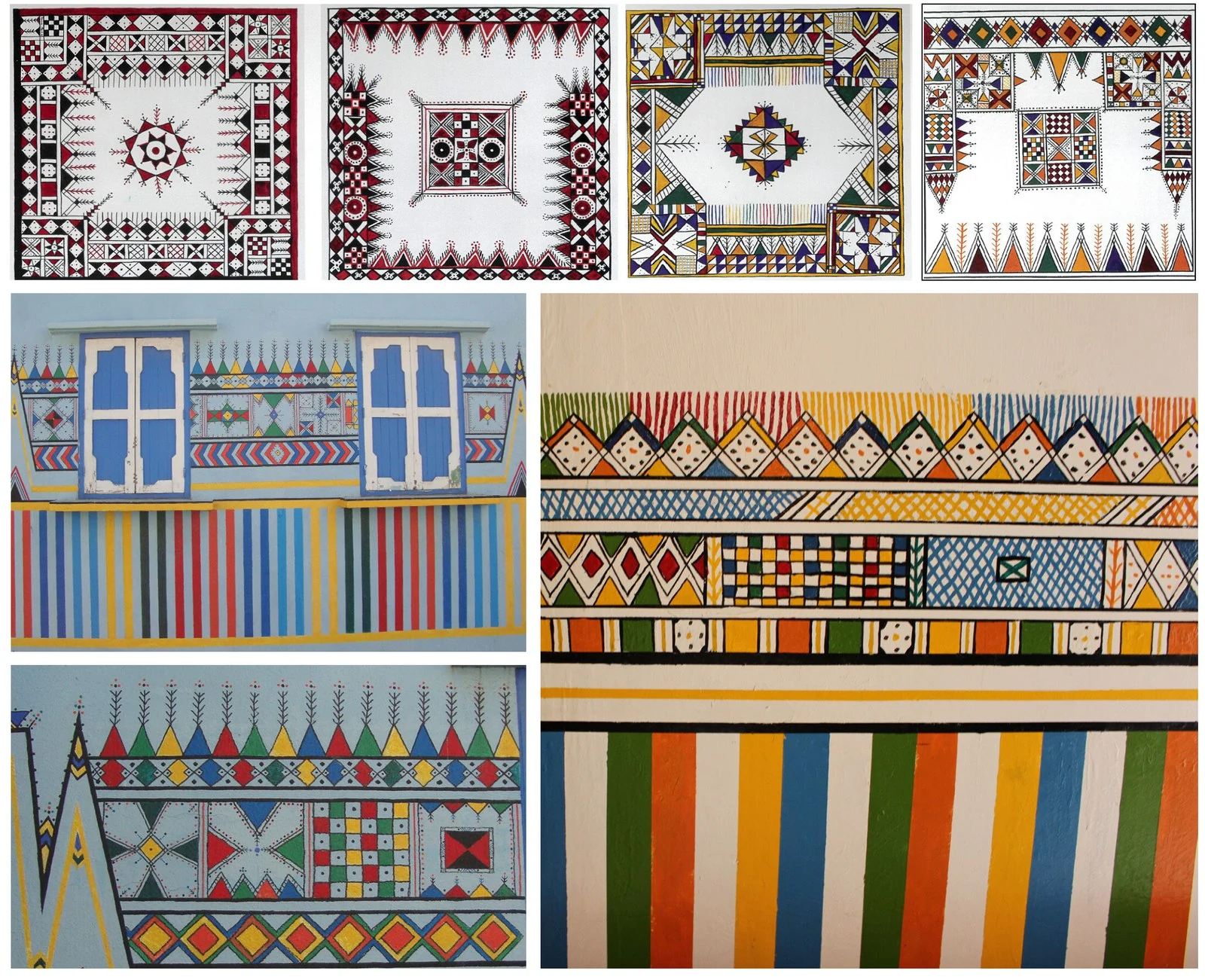
Traditional art, such as Al Qatt Al Aseeri in Abha, as a source for decoration and color accents.
Abha Highlands guidelines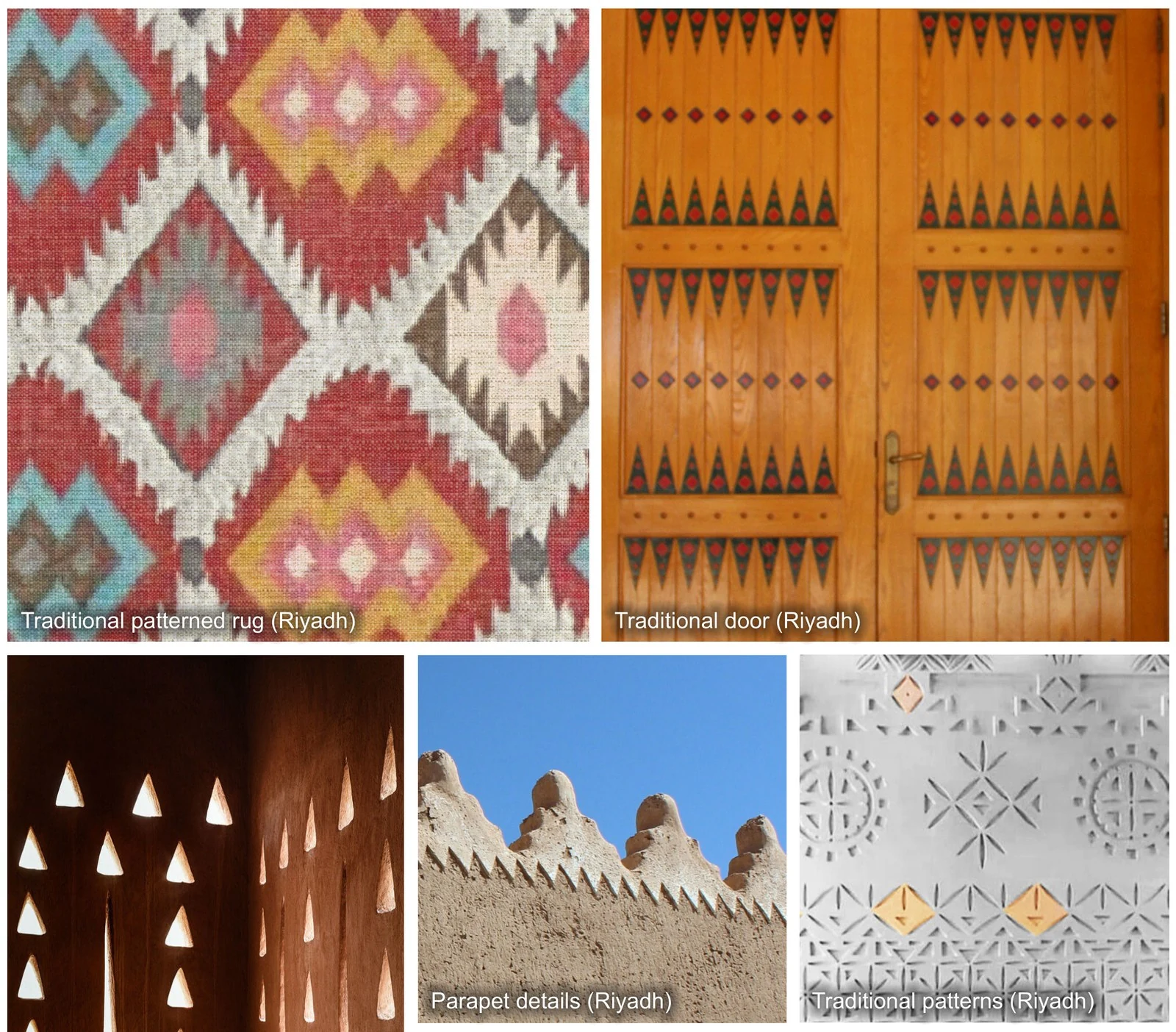
Local motifs simplified into patterns for facades, openings, and parapets.
Central Najdi guidelines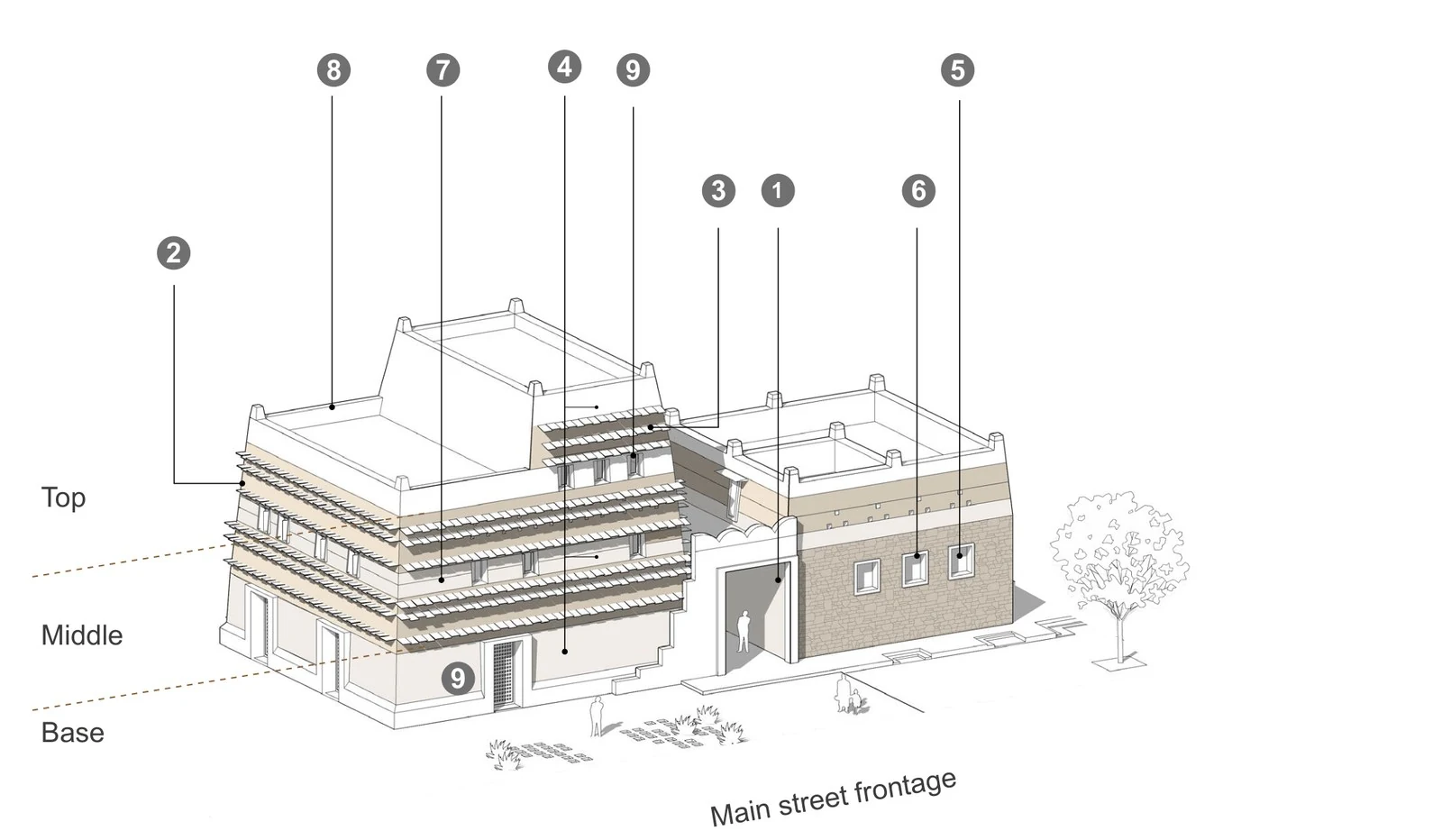
A clear base, middle, and top, each with its own elements.
Abha Highlands guidelines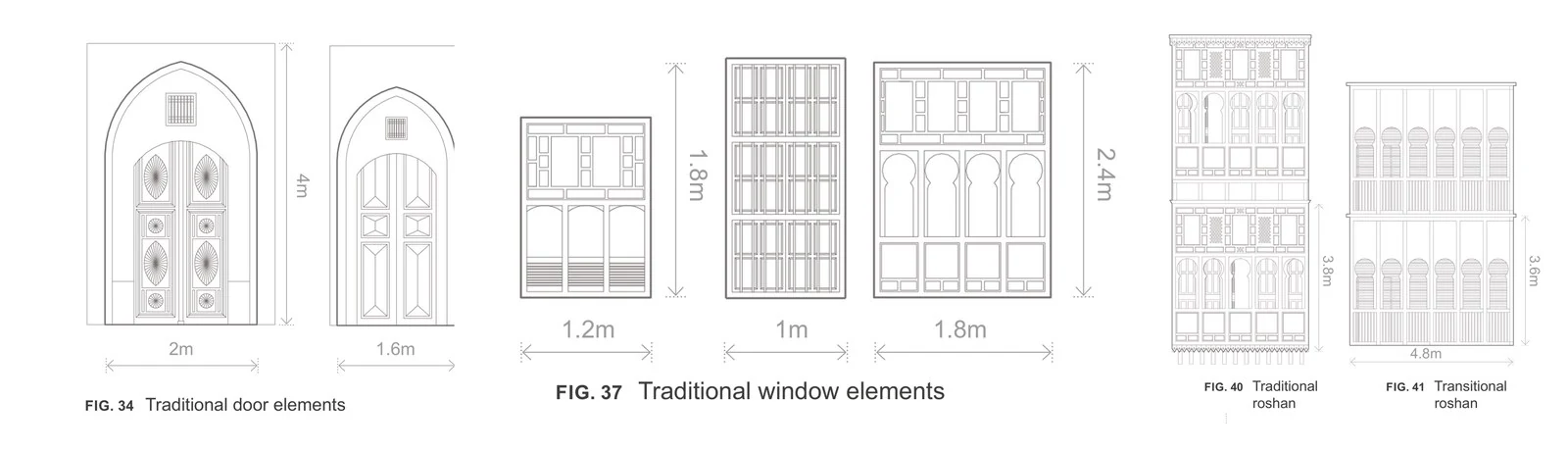
Shapes and proportions of openings, from arched doors to timber roshans.
Hejazi Coast guidelines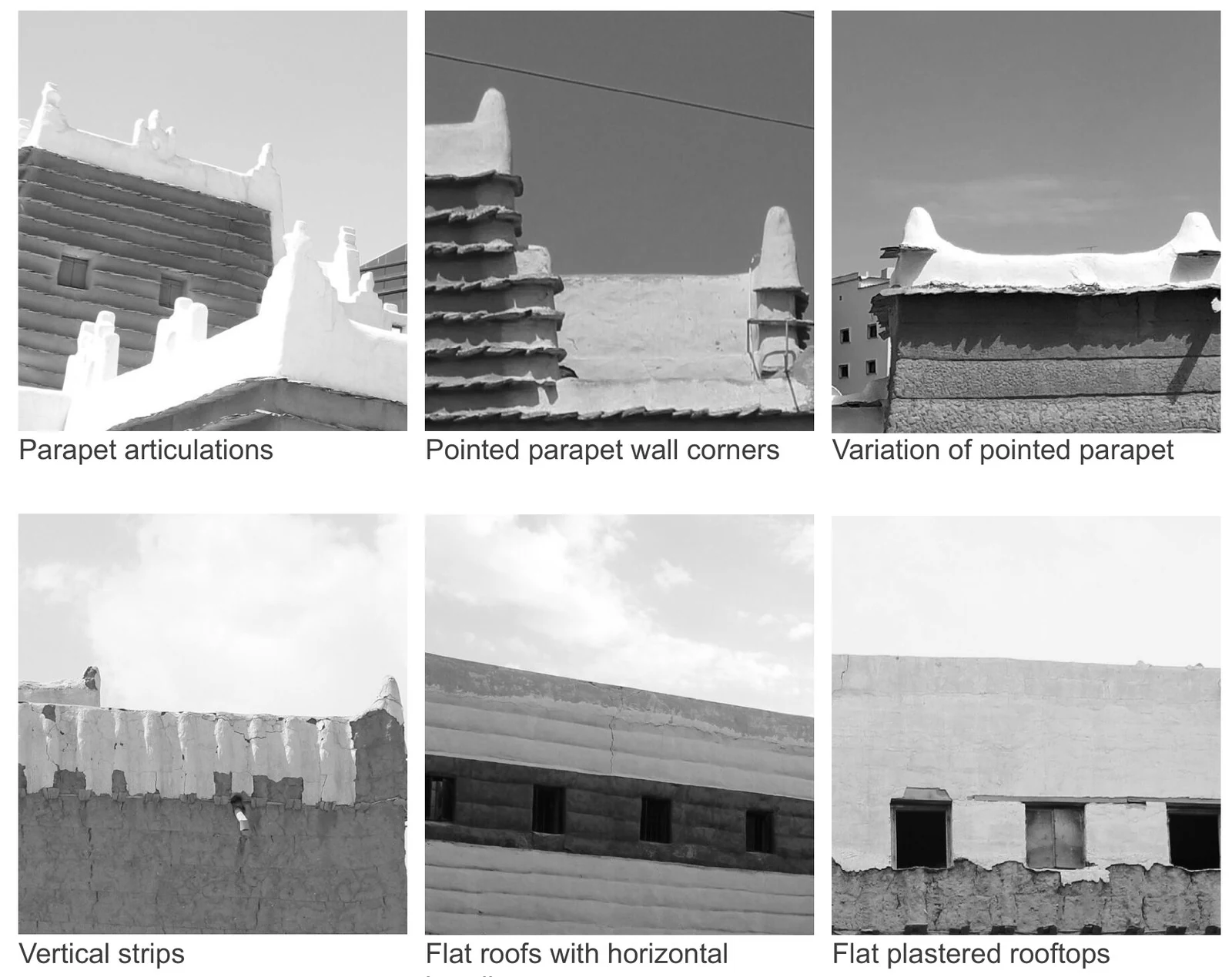
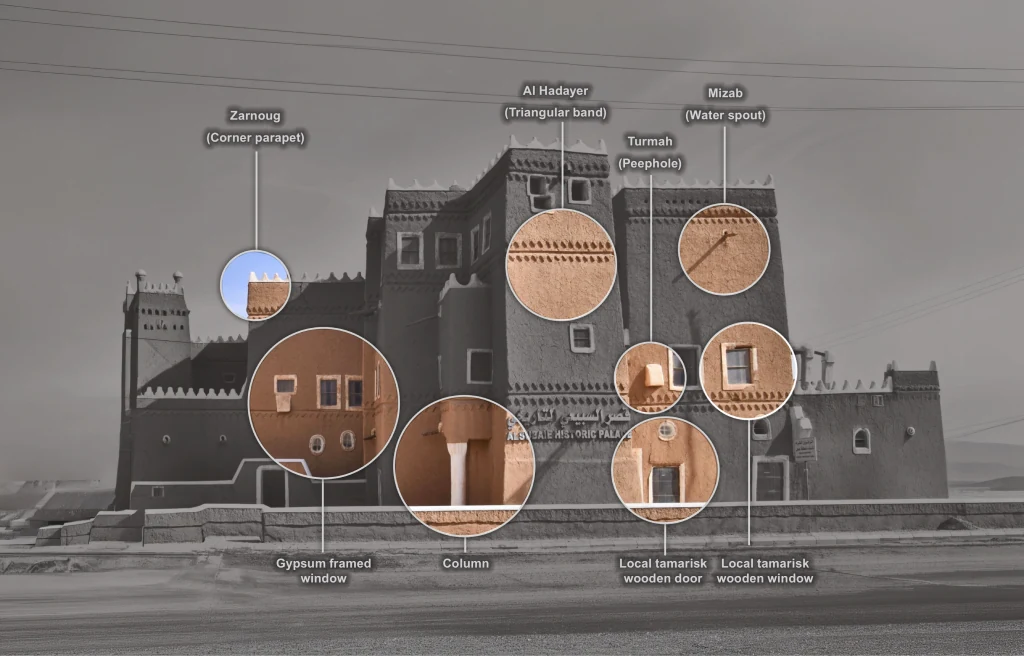
The shape of the roof edge, from pointed corners to stepped crenelations.
Abha Highlands guidelines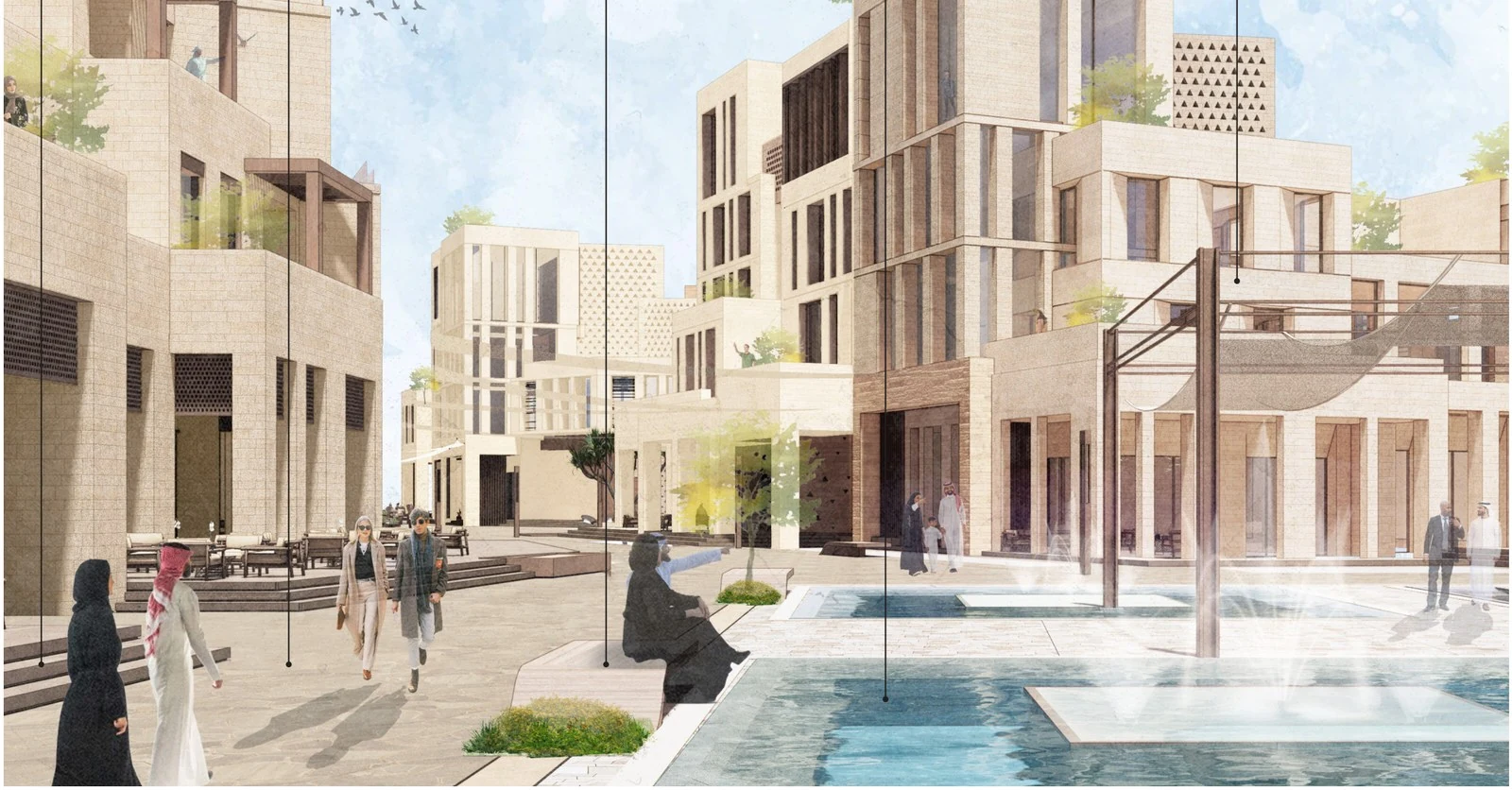
Ground-floor retail with built-in shutters, arcades, and awnings that stay secondary to the facade.
Central Najdi and Taif Highlands guidelines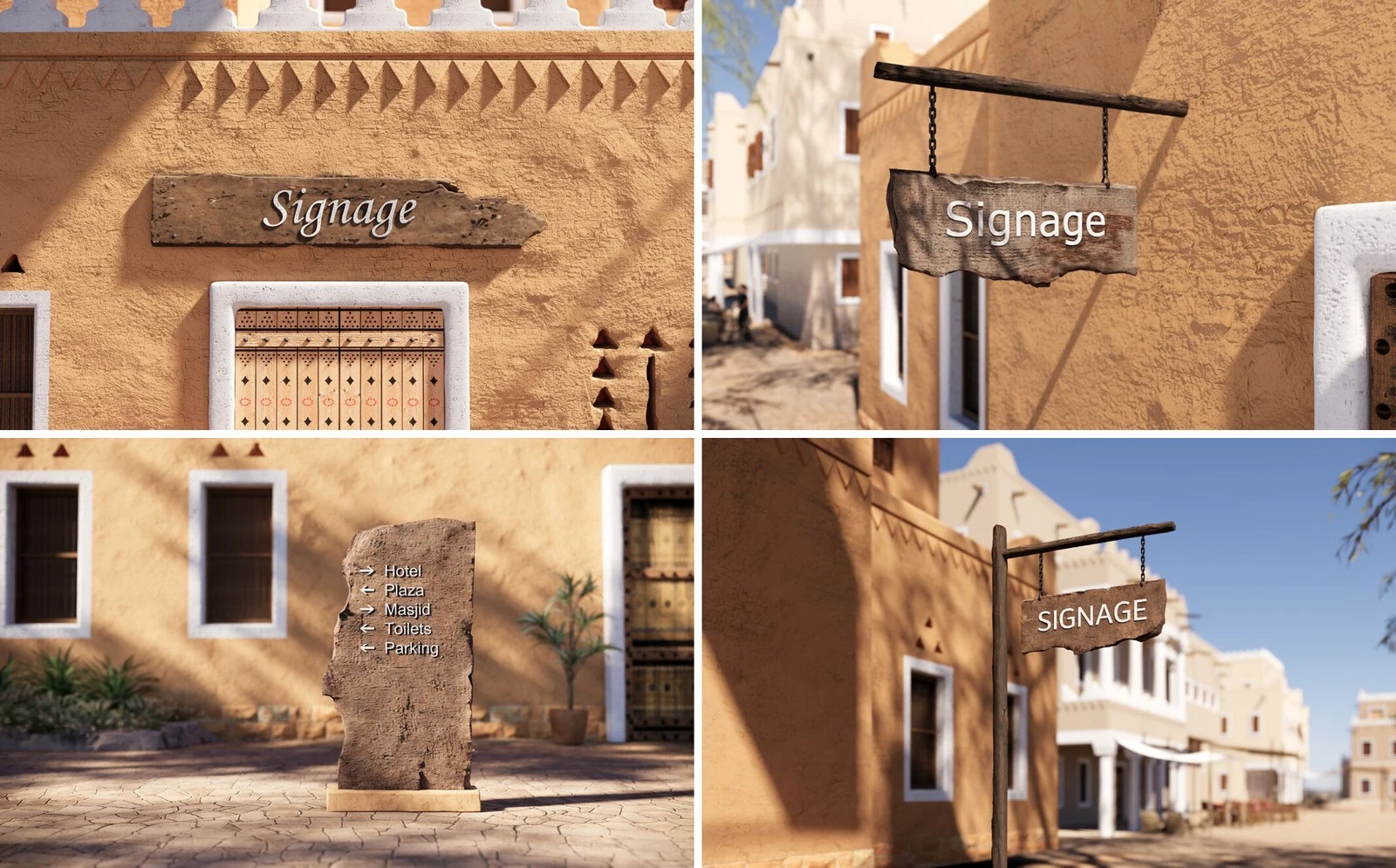
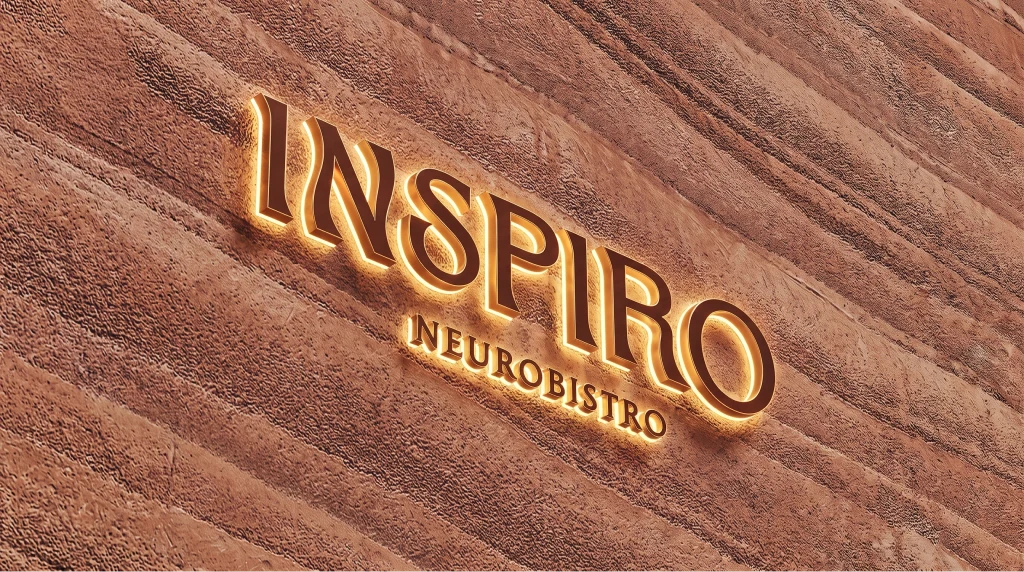
Sign font, material, and color follow the building, and wall signs line up along the street.
Central Najdi guidelinesEach architectural character has its own guidelines, down to color proportions, materials, and details. Here is how we turned these rules into brand decisions for Bee Group, with examples from two regions: Abha Highlands in the Asir mountains and Central Najdi in Riyadh.
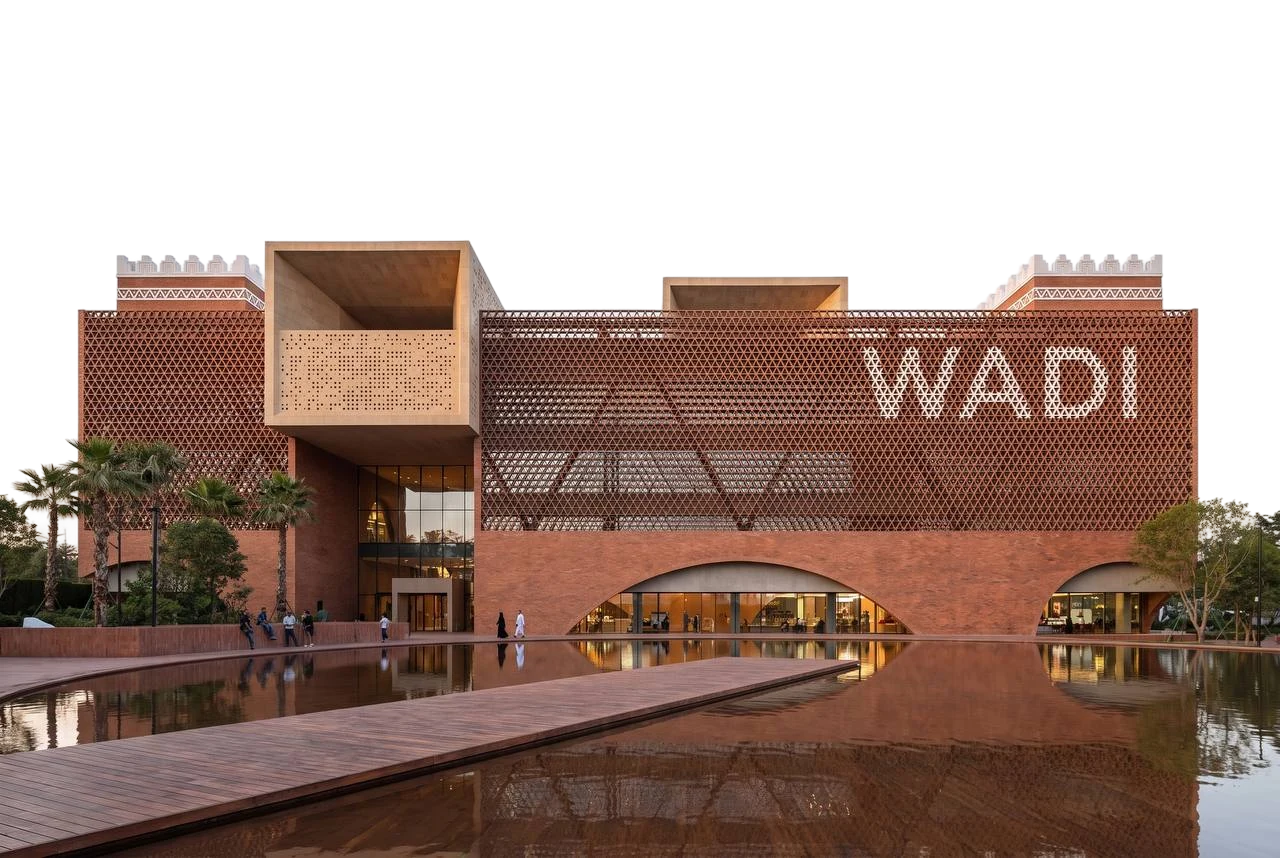
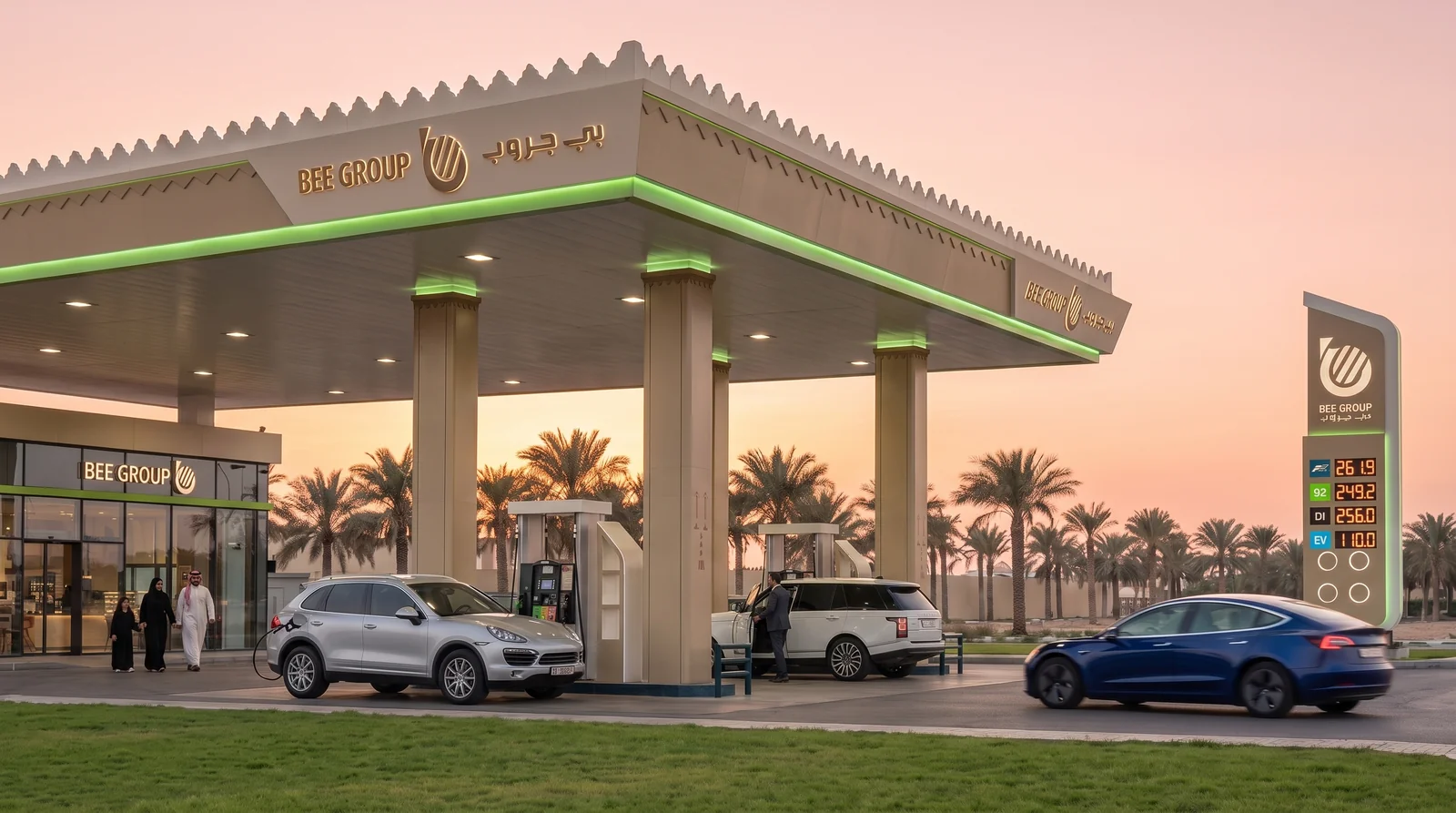
Abha’s guidelines set an official palette, with light earth tones typically making up 60–70% of a public facade’s colors. We built the brand’s main colors from four official Abha shades. The original dark teal and lime green stay as supporting colors and keep the link to the familiar brand.
Today, the rules cover facades and signage. In case they extend to the logo itself, we prepared versions in which the fill changes to a color from the regional palette, while the shape and proportions stay the same. If the rules get stricter, the logo won’t need a redesign.
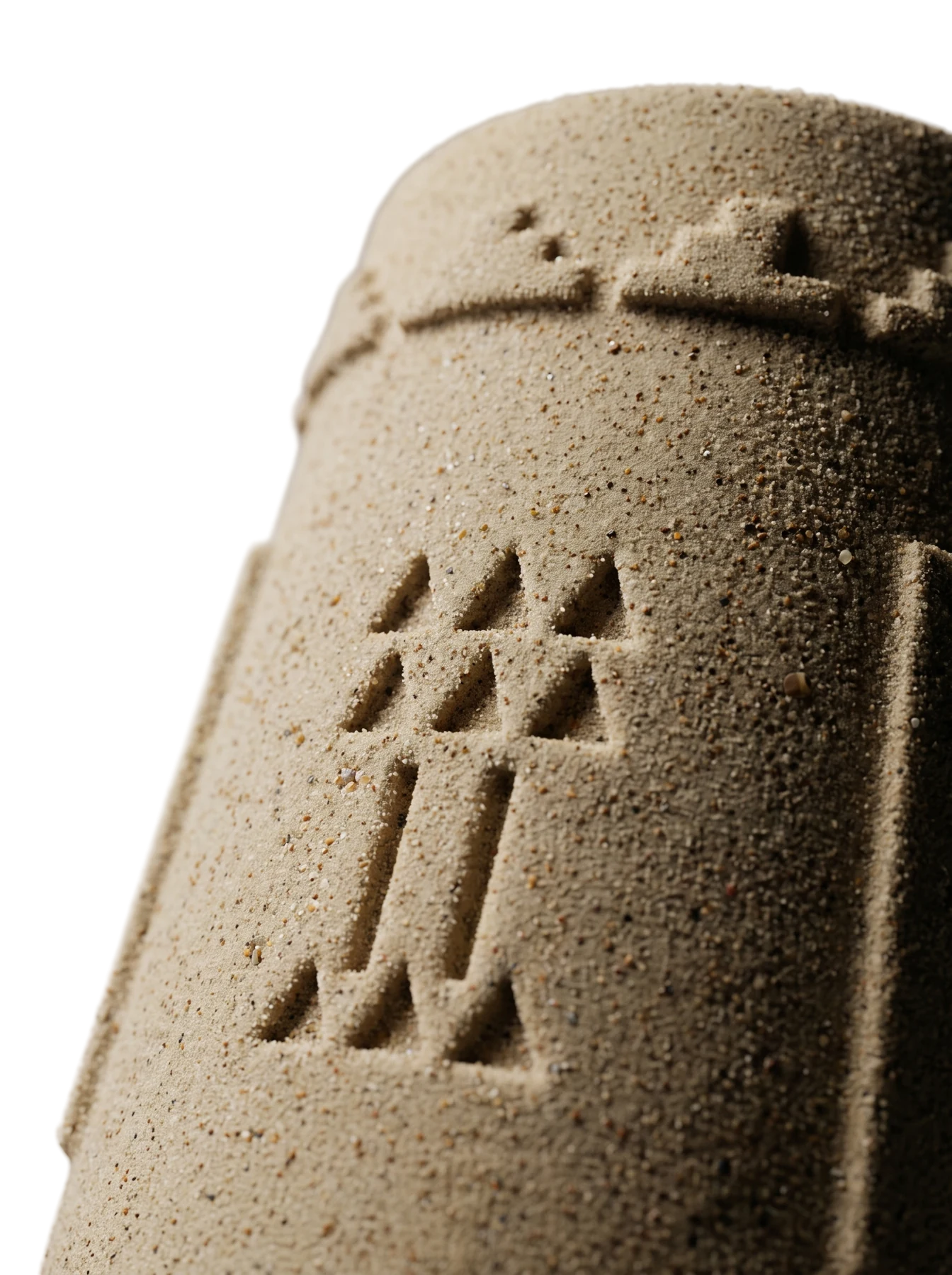
Abha’s guidelines show how local motifs can be simplified into a pattern. We worked the same way: the Abha pattern comes from the layered walls of Asir tower houses, and the Riyadh pattern from the stepped parapets of Najd. Each region gets graphics built on its own architecture.
Each region’s palette starts from its traditional building materials: light stone in the Asir mountains around Abha, adobe brick and rammed earth in Najd around Riyadh. That’s why the Riyadh palette is warmer and sandier. In each city, the brand matches the buildings around it.
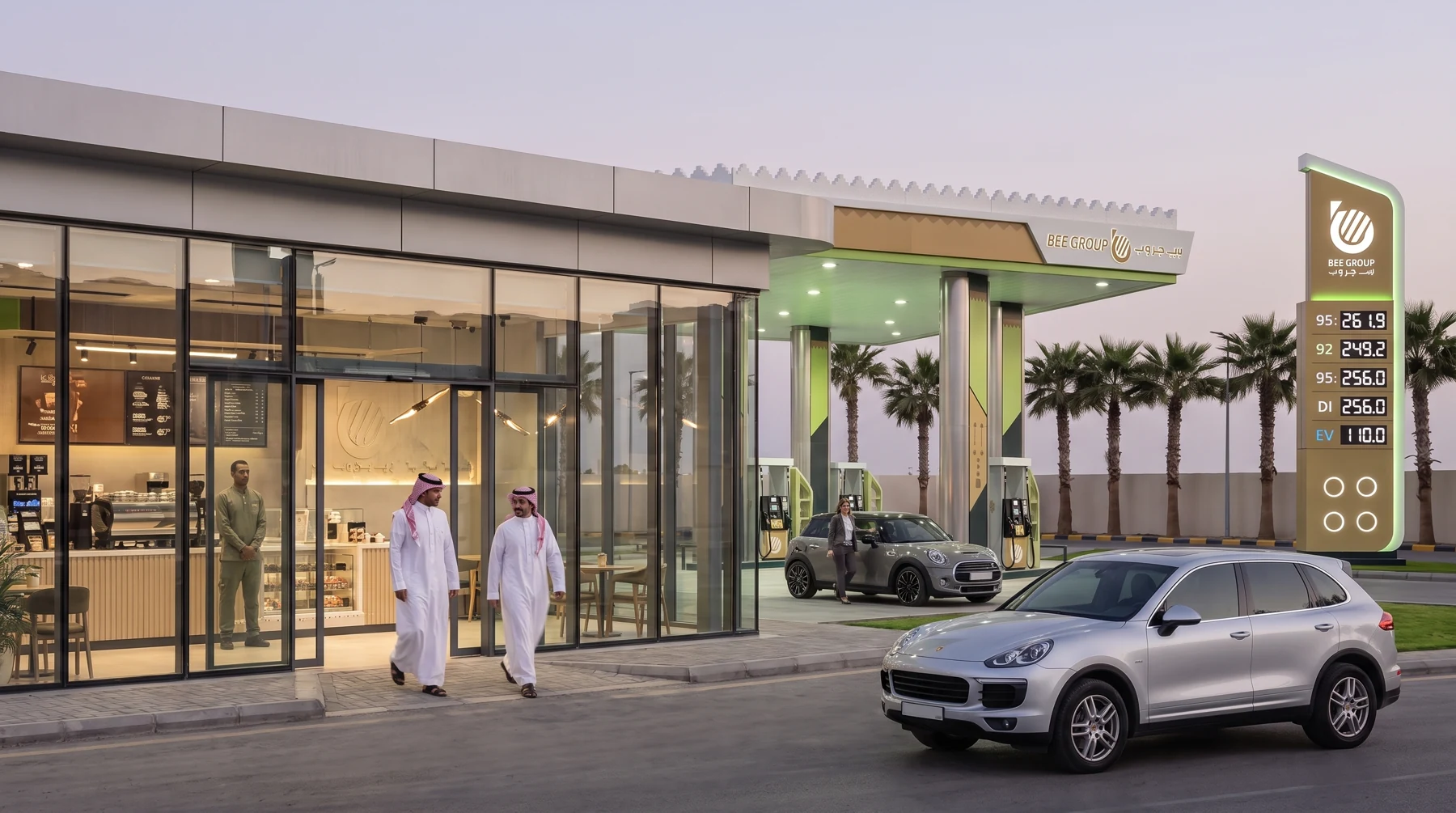
Abha’s guidelines treat historical elements as a starting point for interpretation. On the traditional-style canopy, the stepped parapet and the columns with horizontal bands reinterpret the region’s historic houses. Each detail is linked to a photo of its source, so every design choice can be explained in the drawings that accompany a permit application.



The regional palette and patterns carry over to loyalty cards, cafe cups, and trucks. Customers see the same brand on the station canopy, in their hands, and on the road.
Mozex by Arab Nexus is a product born from the technology holding company Arab Nexus.
Arab Nexus brings institutional capabilities, technological expertise, and deep, firsthand knowledge of the Saudi business landscape. Mozex is a European school of design that, in collaboration with local artists and designers, aims to leave its mark on the visual and intellectual heritage of the region.
Together, we combine technology, local expertise, and design to create solutions that become part of the region’s new visual language.
Start from scratch or rebrand what you already have. We take the project from strategy to launch.
Positioning, brand platform, and communication strategy for the Saudi market.
Learn moreLogo, visual identity, and brand guidelines, with color and facade versions for each region.
Learn moreWebsites and digital products that carry the brand online.
Learn moreTell us about your company, locations, and goals in a short brief. We’ll review it and come back with questions and a proposed approach.
Start Your Brief